Showing posts with label meaning. Show all posts

July 28, 2014

“This is the only reality there is.”


“Everyone has his own reality in which, if one is not too cautious, timid or frightened, one swims. This is the only reality there is.”

-Henry Miller, from Stand Still Like the Hummingbird (1962)


(photos: backyard, July 18th; click image for full-screen)

November 5, 2013

Triangle vs. Circle!


If you're going to drive (or even walk) in Germany, you really should know the difference between these two signs:


Do you know the difference? For the answer, click here.

August 2, 2013

Pretty much the last thing I expected to hear about a Wagner opera at Bayreuth.


"... for no clear reasons, singers smear one another with crude oil."

- from "At Bayreuth, Boos and Dropped Jaws" by Anthony Tommasini in today's New York Times.

April 4, 2013

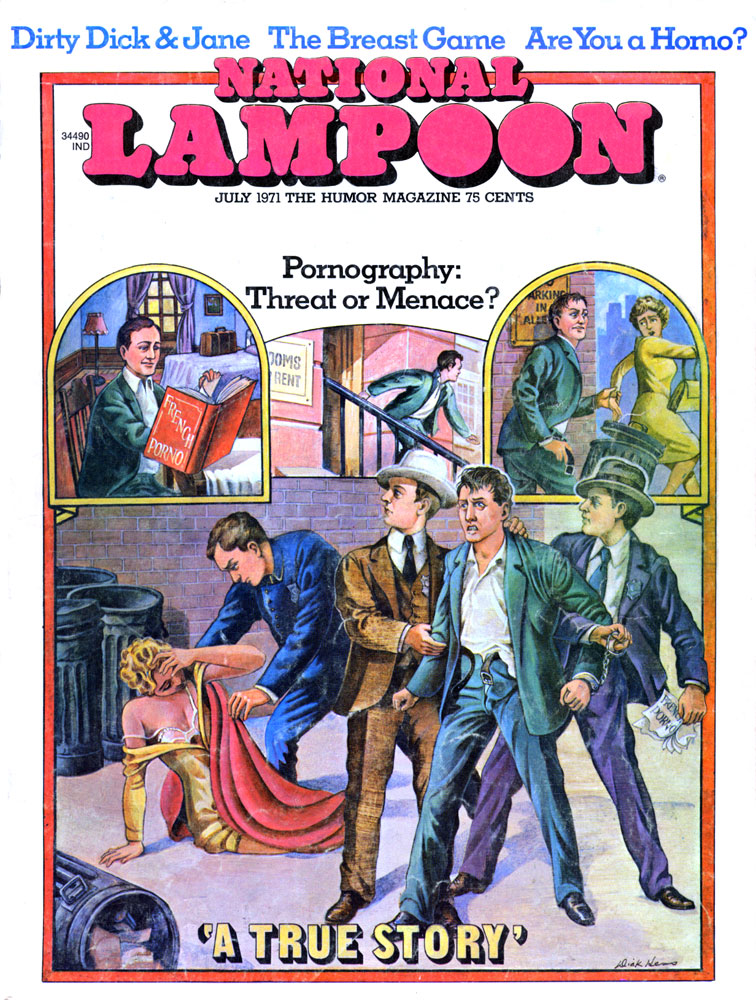
Magnetic fields: Threat, or menace? [repost]


I have worked with magnets for over thirty years, yet I admit that I'm not sure if magnetic fields are real.

Now, they tell you that the magnetic field is real, real like the river's undertow that pulls you past the eddies beneath the sharp rocks and beats you down, but it's not. Not really. You feel magnetic forces, to be sure, but the magnetic field is not the fundamental truth. The truth is the magnetic vector potential. And this is not just my opinion; this has been known for over sixty years.

The magnetic field (what you hear about) is written as B; the magnetic vector potential (what you perhaps never heard about before today) is written as A. They are related by:

B =  x A

("The magnetic field is the curl of the magnetic vector potential.")

The truth is revealed by the Aharonov–Bohm effect, in which particle traveling past a long thin solenoid experiences a phase shift, even though the magnetic field is confined to the interior of the solenoid, which the particle never enters! Why does this happen? It happens because the particle sees the magnetic vector potential outside the solenoid. (A cool animation is available.)

So, A (the magnetic vector potential) is what's true and real and actually felt by the particle, while B (the magnetic field) is sort of an emanation, or a mathematical device, that almost always gives you the right answer (except in clever made-up configurations designed to demonstrate the Aharonov–Bohm effect, that is), and is handy. I suppose an attorney might say that while the magnetic field is (usually) a truth, it is not the whole truth.

Perhaps it's like your car's engine, where horsepower is what you read about, but torque is what you feel. The magnetic field is what you read about, but the magnetic vector potential is what you feel.

[Please note: Persons seeking legal advice should consult a member of their state Bar Association; we may in the future discuss an alternative approach to interpreting the Aharonov-Bohm effect, which does not appear to to rob the magnetic field of so much of her charm; post title refers to this.]

[reposted from June, 2010]

December 6, 2012

Are you a methodologist or an ASS?


In the article "Primary study authors of significant studies are more likely to believe that a strong association exists in a heterogeneous meta-analysis compared with methodologists" in the Journal of Clinical Epidemiology, Orestis A. Panagiotou and John P.A. Ioannidis report that "authors of significant studies" (a group indicated by the acronym "ASS" in the paper's Tables; for example Table 2 has a column labeled "ASS vs. methodologists") are "influenced by their own investment in the field" and so are "more likely to believe that a strong association exists."

October 5, 2012

"Ideas flee the prison of the mind ..."

Escapism? I think escapism is healthy. Every time you cast a thought forward or look to the sky, you're escaping. I don't think of escapism as something outside of yourself; it's something natural and fundamental, like breathing. Everything we have was "escaped" into creation, right? Ideas flee the prison of the mind, become real. I believe in it as much as I believe in riding my bike or lying in the grass or digging in the dirt or eating bread or drinking water or skinning your knee. It's key.
- from the interview with Brian Chippendale in the July/August 2012 issue of the Believer.

August 14, 2012

Got a two-headed little mouse (on each arm)?


The full (Latin) name of the human biceps is "musculus biceps brachii" which means "two-headed little mouse of the arm."

"Two-headed" because the biceps is made up of two bundles, each with its own attachment point, or "head."

"Little mouse" because the muscle resembles the back of a mouse!  Indeed, the biceps appears to have given all muscles their name.

(And yes, the triceps has three "heads," and the quadriceps has four.)

July 1, 2012

Some good advice from Karen Amstrong.


"There are times when you have to speak out against injustice or cruelty. But if you speak — and this is what Gandhi said — in order to punish or wound, you will do more harm than good. The Dalai Lama said that to condemn injustice with hatred in your voice will make the injustice worse. ... So it does no good to attack viciously. The thing to do is not to rise to the bait."
-from an interview with Karen Armstrong in the June issue of the Believer magazine.

March 23, 2012

Narrative, Big Data & the Future of Communication

My reflections on the SXSW conference, Emotion and the Search for Meaning for SXSW, have been published here.

August 31, 2011

Footnote of the month: On laws of nature.


Following upon our footnote of the month for July, we present, barely in time, a very different footnote of the month for August. Here is the fourth footnote of the Introduction to the fascinating 2006 book "Rhythms of the Brain" by Prof. György Buzsáki:
"Nature, of course, has no laws, desires, goals, or drives. It simply generates certain regularities that we conveniently assume are governed by some outside forces and use a third-person perspective to refer to these regularities."

April 26, 2011

"... friction and vibration and resonance ..."


There's a form of neuroessentialism that holds that because the brain is made of cells, we should study cellular neuroscience, and not psychology, if our goal is to understand the mind. To us, that's a bit like saying that to better appreciate the beauty of a sonata performed by a string quartet, you should just study friction and vibration and resonance, and not bother with the theory or history of music.

April 21, 2011

"Accessible" & "acceptance".


The wonderful poetry of Billy Collins is often called "accessible", but Mr. Collins prefers the term "hospitable", because "accessible" sounds like it involves ramps & handrails.

Similarly, in the context of embracing the diversity of our communities, I've wondered whether we could use a more positive word than "tolerance", because "tolerance" sounds like it means putting up with people who smell funny. Today, I discovered that the word I've been looking for just might be "acceptance".

Hmm... I wonder what else I have to learn from professional rugby players...


April 11, 2011

In Minnesota, the opposite of "vanity sizing"?


Have you heard of "vanity sizing", or "size inflation"? That's when articles of clothing are (sometimes much!) larger than the nominal sizes indicated on their labels. In most of the USA, clothes are bigger than the labels say. But, not everywhere. In some places, it appears, nominal sizes are ambitious, rather than modest: If you've got a head, a firm named for (but not actually located in) one of the Twin Ports (Duluth, Minnesota & Superior, Wisconsin) wants to sell you a size "XL/2XL" hat, with the caveat that:
Do these headwear purveyors think their size-M customers will leave their "XL/2XL" hats out, labels visible, so that their friends will think they're smart people with big heads?

March 22, 2011

Change, movement, & friction.


Just one sentence from "Democracy 101: Mark Twain's farewell address" by Lewis H. Lapham in the April 2011 issue of Harper's Magazine:
Democracy is a dangerous business; it allies itself to change, which engenders movement, which induces friction, which implies unhappiness, which assumes conflict not only as the normal but also as the necessary condition of its existence.

January 11, 2011

"Second Amendment remedies"


"Only our surprise that the unforeseen was fated allows the arbitrary to disappear."
-Philip Guston (1913 – 1980)


Because NeuroCooking is read in 70 countries, we would like to try to put recent tragic events here into context, especially for our friends outside the USA.


The Second Amendment to the US Constitution is part of the Bill of Rights, introduced in 1789 and approved in 1791. The amendment says:
"A well regulated Militia being necessary to the security of a free State, the right of the people to keep and bear arms shall not be infringed."
Here "arms" means guns.


Ms. Sharron Angle, recently the Republican candidate in the general election for a US Senate Senate seat in the State of Nevada, said:
"... if this Congress keeps going the way it is, people are really looking toward those Second Amendment remedies and saying my goodness what can we do to turn this country around? I'll tell you the first thing we need to do is take Harry Reid out."
Now, this call for the assassination of an incumbent US Senator came from a major-party general-election nominee. Similarly, it was Republican US Representative from Minnesota Michele Bachmann, not some random nut-job in a dirty anorak, who said:
"I want people in Minnesota armed and dangerous on this issue of the energy tax because we need to fight back."


Former half-term Alaskan Governor Sarah Palin (who was the Republican Vice-Presidential candidate in 2008) distributed widely this graphic, featuring rifle cross-hairs, under the heading "Don't retreat – instead, reload!":


Here is the Hon. Gabrielle Giffords commenting, presciently, on that map:


Thank you, NeuroCooking friends, for letting us take a moment this morning to share with you these recent examples of the rhetoric of violence. It's not a pleasant topic – but, as recent events have shown, it is important.


December 16, 2010

Correction of the day.


"A music review on Monday about the German band Rammstein, at Madison Square Garden, misstated the title of one of its songs and the English translation. The song is 'Wiener Blut' ('Viennese Blood'), not 'Weiner Blut' ('Blood Wine')."

– from The New York Times.

ShareThis

Blog Archive